The Shoreline
The shoreline is an ever changing region where tides and erosion constantly reshape the land’s edge. Sand moves around with every wave, and while the rock erodes at a much slower rate, it changes as well.
Alongside the ever-shifting tidal range, the sea level also changes more than many may realize over vast periods of time. The level of the oceans have fluctuated by hundreds of meters over the lifetime of the Earth — from today’s level, we’ve discovered changes ranging from below 130 meters (426 ft) to above 250 meters (820 ft). It is estimated that it has been as high as 400 meters above today’s level around 250 million years ago. Prior to that, in the Earth’s 4.5 billion years of age, we have less information on precise levels.
However, the sea levels have been in a fairly stabilized state since the 130 meter rise following the last ice age around 10,000 years ago. While this would normally suggest a shift in the cycle reversing to a sea level drop, the data says otherwise. Since the Industrial Revolution, human-made machines have been emitting carbon dioxide, methane, and nitrous oxide as a result of our technological advancement. The changes to the environment caused by these emissions are commonly referred to as global warming, and have led to a continued rise in sea levels due to melting glaciers. Of course, this is something we now know, and we are beginning to find ways to control and limit these emissions. This will take a lot of time and global coordination.
Sea level changes have been recorded and evaluated since the late 1800s, building a database for projected forecasting. However, with less than 200 years of data, the projections are a warning at best. During the 20th century, the global average sea levels have risen 6.7 inches in 100 years. In the last 30 years the global average has risen 3.9 inches. We will reach the 20th century’s numbers in half the time if this rate continues.
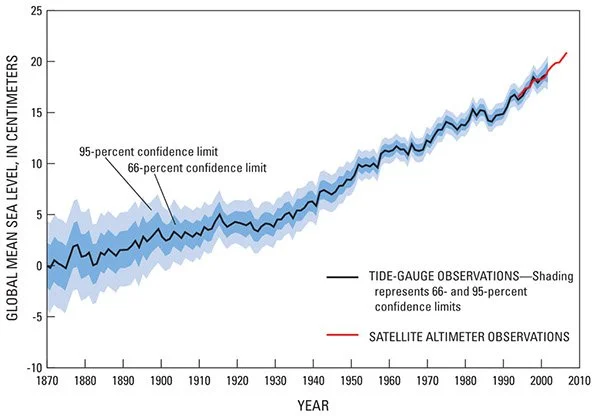
From the USGS Publications Warehouse
In 1993, NASA launched the first satellite dedicated to precisely measuring sea levels without the variations of land rise and fall, and with this we have been able to further monitor a concerning trend over the last twenty years. Since 2000, the average global sea level has risen 3.57 inches. While not every year’s sea level exceeds the previous, some recent years have significantly increased, only stalled by natural phases of below-average sea surface temperature.
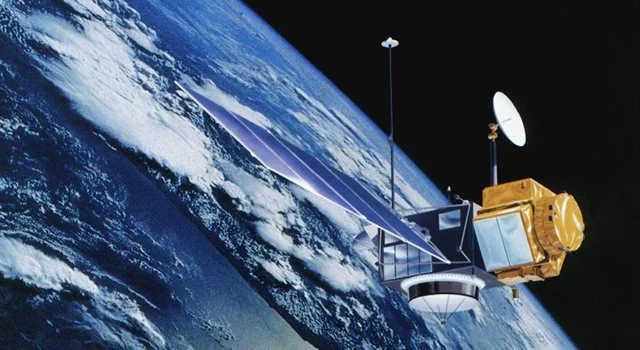
Artist's concept of TOPEX/Poseidon. Credit: NASA/JPL
Two factors that contribute to sea level rise are the melting of glacier ice on land feeding the oceans, and water expansion as the water temperature rises adding increasing water volume. These two factors continuously fuel one another, and this creates a momentum of sea level rise that will continue to accelerate with time. A decline of emitted gasses will not stop quickly, and the sea level rise will most likely take centuries to recover even after any decrease of emissions due to the momentum of ice melt and warming expansion.
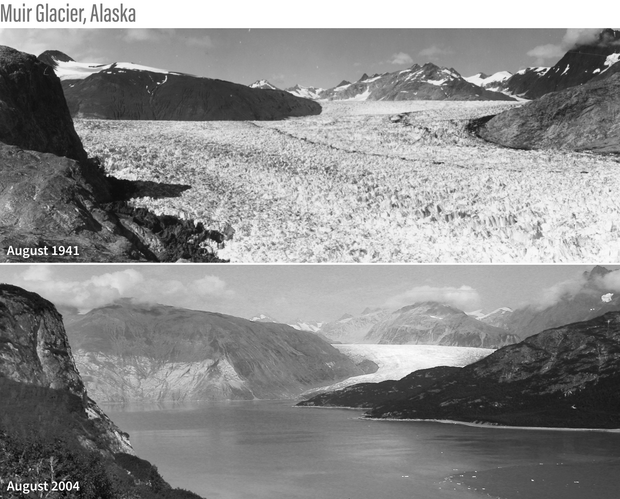
Photos from the National Snow and Ice Data Center’s collection of repeat photography of glaciers.
Conclusion:
While information has grown more accessible with time, we are unsure of how much the acceleration will increase. If the change is exponential, sea levels could rise as much as five feet in the next century. However, it could also settle to a more consistent rise, which may raise it by only one foot in the same amount of time. No matter the rate, the sea is rising and the effects will be felt more frequently every decade with results varying regionally.
With this knowledge, we need to evaluate how we build and restructure on the coastlines. Streets, parks, and terraces that flood with high tides and heavy rains all have three options. They can make use of land reclamation, build on sea walls and piers, or areas can be dredged to create waterways for boat traffic. As well as this, measures such as installing tsunami walls would need to be taken to better protect from natural disasters and storm surge, which are only increasing with the warming trend.
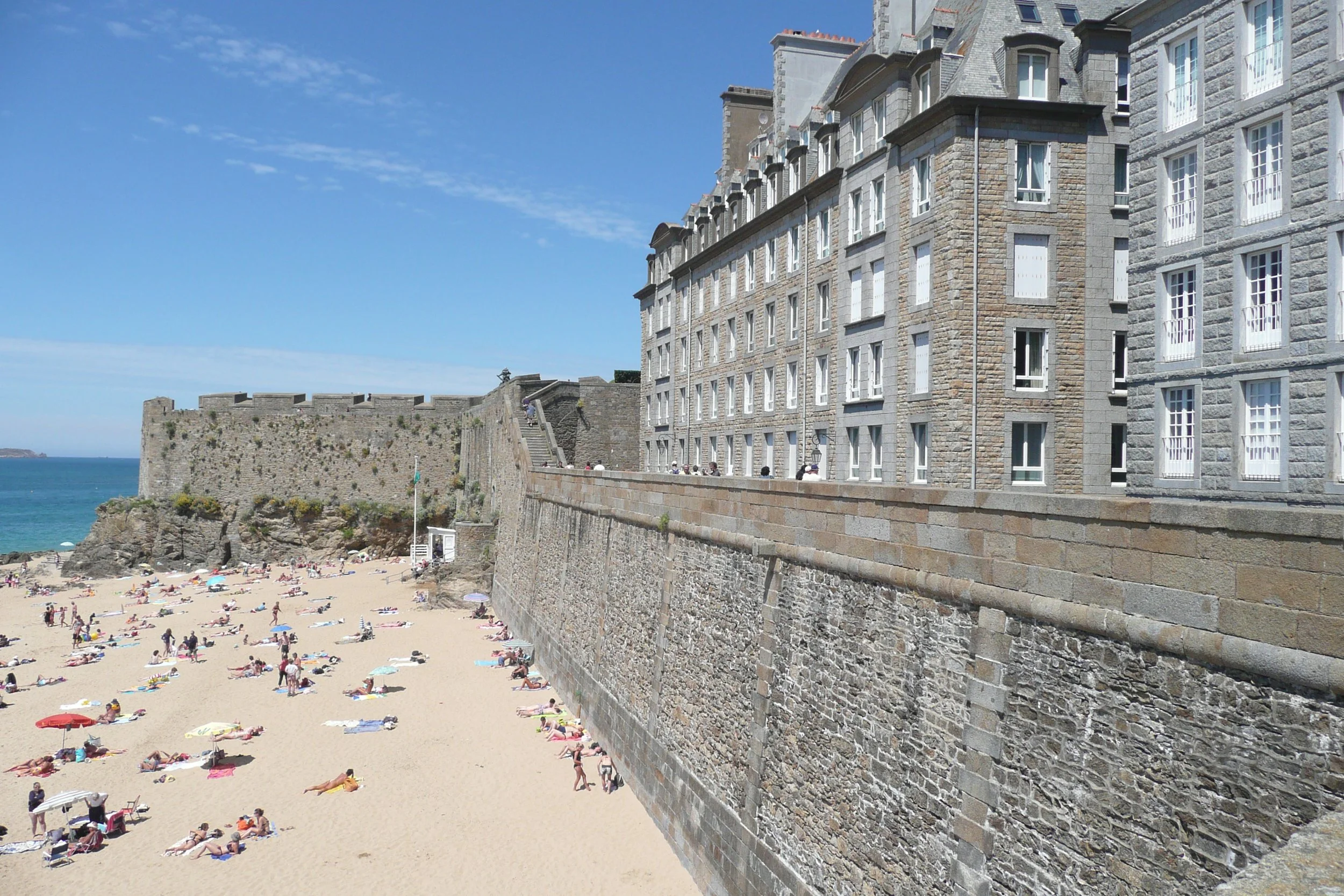
St Malo Beach, France
In all, future development near the water must be built like it’s on the water already. Building foundations must be made with the rising levels as part of the plan. Structures that will one day be engulfed can be reinforced to become gatherings places, parks, and habitations that will last much longer. Reservoirs can be established to help divert disaster surge and reduce devastating effects. We all have this knowledge and information available, and it is time to do something about it. Nearly 40% of the U.S. population resides in coastal counties, and for their safety, it would be disastrous to ignore these facts.

Ciudad de las Artes y las Ciencias. Valencia, Spain